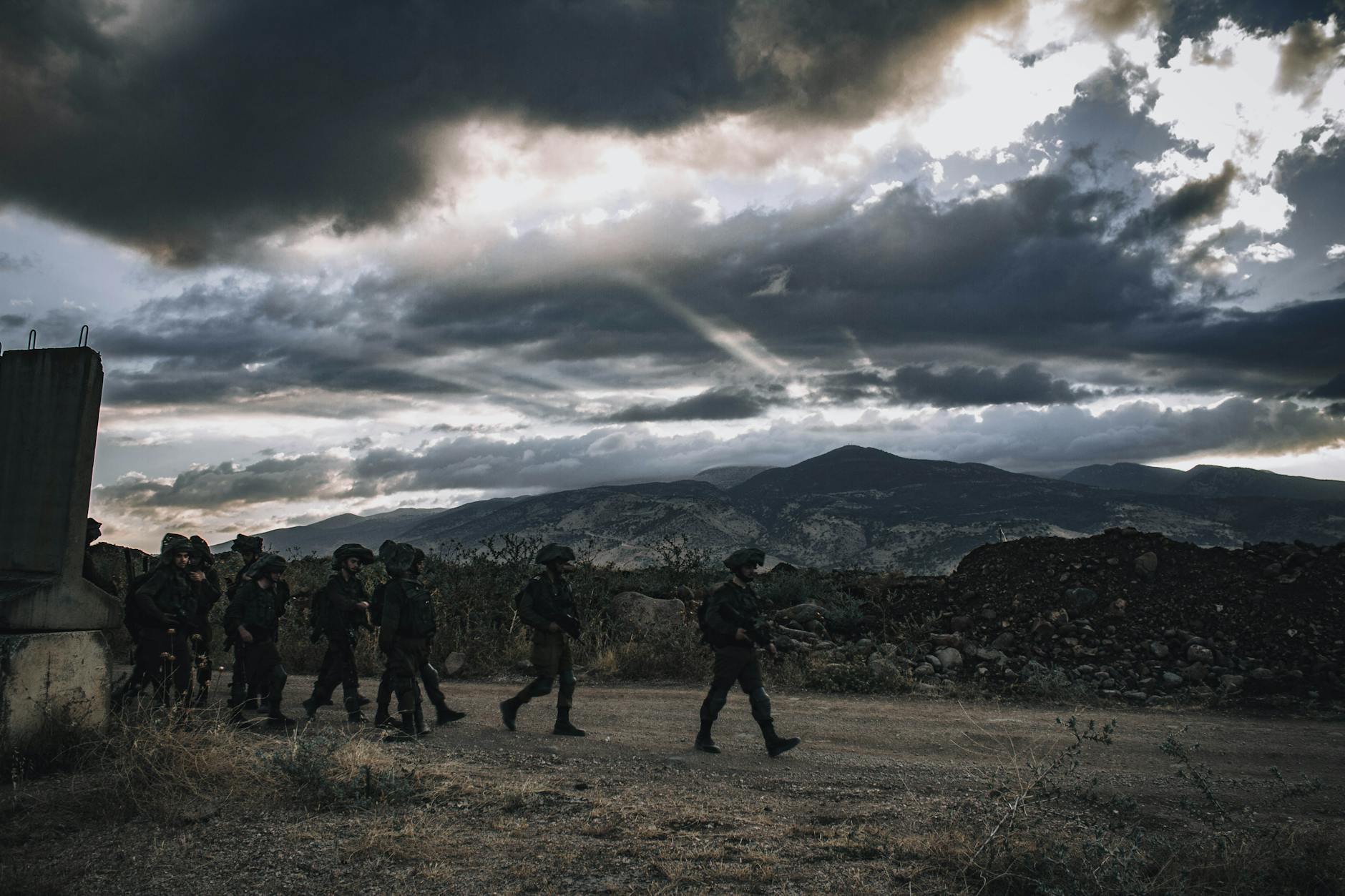
In a dramatic escalation of military tensions, the United States and Israel launched a coordinated military operation against Iran early Saturday morning. This unprecedented move, framed by President Trump as an essential step to dismantle Iran's nuclear ambitions and bolster U.S. national security, calls into question the future of Middle Eastern geopolitics as the region braces for potential conflict.
A Prelude to Conflict
The lead-up to this military action saw President Trump repeatedly condemn the Iranian regime for its ongoing human rights violations and its pursuit of nuclear capabilities. In a video posted on Truth Social, he emphasized the need for "Operation Epic Fury," describing it as a crucial measure to "prevent this very wicked, radical dictatorship from threatening America and our core national security interests."
Trump's announcement came on the heels of a tumultuous period for Iran, marked by widespread domestic protests against the government, which were met with violent crackdowns. Amid these recent tensions, U.S. military resources had been increasingly mobilized in the region, setting the stage for the airstrikes that followed.
Details of the Operation
The joint U.S.-Israeli strikes targeted key Iranian military and nuclear sites, an action that was confirmed by military officials from both nations. Israeli Prime Minister Benjamin Netanyahu described the operation not only as a military necessity but also a pathway for the Iranian populace toward freedom. “Our joint action will create the conditions for the courageous Iranian people to take their destiny into their own hands," he stated.
The initial strikes reportedly included significant targets related to Iran's missile development programs and command structures, further exacerbating the already fraught relations between Iran and its adversaries. In response, Iran launched retaliatory missile strikes targeting U.S. military bases in regions such as Bahrain and Kuwait, and tensions rapidly escalated as civilian alerts were activated across Israel.
International Reaction
As news of the strikes broke, global leaders reacted with concern. The United Nations Secretary-General António Guterres condemned the military escalation, warning that failure to de-escalate could widen the conflict and endanger civilians. "I strongly encourage all parties to return immediately to the negotiating table," he urged, echoing the sentiments of diplomats from several countries, including France, Germany, and the United Kingdom, all of whom called for maximum restraint.
Iran's Foreign Minister, Abbas Araghchi, dismissed Trump’s claims about seeing a peaceful outcome for the Iranian population. Instead, he reaffirmed Iran's right to self-defense against what he described as "an act of aggression." The Iranian government labeled the airstrikes a "gross violation" of its sovereignty, promising a strong military response.
Polling and Public Sentiment
Recent polling conducted by CBS News indicated a divided American public on the issue of military action against Iran. In the days leading up to the operation, many Americans expressed a mix of support for pressuring Iran while simultaneously advocating for diplomatic solutions rather than military confrontations.
The uncertain outcome of the conflict has left many wondering about the implications of prolonged engagement, as the public largely remains wary of potential casualties and the risks of escalation. As analysts have noted, the nature of the conflict and Iran's response could shape not just regional stability but also U.S. foreign policy moving forward.
What's Next?
As military operations continue, the world watches closely, aware that the situation remains fluid and fraught with danger. The U.S. military has raised alert levels at strategic installations, reflecting the direct threats emerging from Iranian missile launches aimed at U.S. interests in the region.
With diplomatic pathways seemingly closed in the wake of military aggression, the potential for further conflict underscores the necessity of proactive international dialogue. In a moment where military might is unmistakably at the forefront, the global community must grapple with the ramifications of these hostilities, balancing the scales between aggression and diplomacy in a rapidly changing landscape.
The unfolding drama in the Middle East remains complex and marked by uncertainty, as the region braces itself for what might be the beginning of a new chapter in U.S.-Iran relations. As leaders gather in emergency sessions to assess the situation, one thing is clear: the stakes have never been higher.